

| 000 | 01023camuu2200289 a 4500 | |
| 001 | 000045813732 | |
| 005 | 20141023105654 | |
| 008 | 141022s2007 enkab b 000 0 eng | |
| 010 | ▼a 2007407161 | |
| 020 | ▼a 9780415438735 | |
| 035 | ▼a (KERIS)REF000013170924 | |
| 040 | ▼a OSU ▼c OSU ▼d DLC ▼d 211009 | |
| 050 | 0 0 | ▼a DS518.15 ▼b .G64 2007 |
| 082 | 0 0 | ▼a 327.51059 ▼2 23 |
| 084 | ▼a 327.51059 ▼2 DDCK | |
| 090 | ▼a 327.51059 ▼b G614d | |
| 100 | 1 | ▼a Goh, Evelyn. |
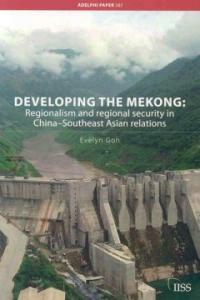
| 245 | 1 0 | ▼a Developing the Mekong : ▼b regionalism and regional security in China-Southeast Asian relations / ▼c Evelyn Goh. |
| 260 | ▼a London : ▼b International Institute for Strategic Studies, ▼c c2007. | |
| 300 | ▼a 71 p. : ▼b ill., map ; ▼c 24 cm. | |
| 490 | 1 | ▼a Adelphi paper, ▼x 0567-932X ; ▼v 387 |
| 504 | ▼a Includes bibliographical references. | |
| 651 | 0 | ▼a China ▼x Foreign relations ▼z Southeast Asia. |
| 651 | 0 | ▼a Mekong River Watershed ▼x Development. |
| 830 | 0 | ▼a Adelphi papers ; ▼v no. 387. |
| 945 | ▼a KLPA |
소장정보
| No. | 소장처 | 청구기호 | 등록번호 | 도서상태 | 반납예정일 | 예약 | 서비스 |
|---|---|---|---|---|---|---|---|
| No. 1 | 소장처 과학도서관/Sci-Info(2층서고)/ | 청구기호 327.51059 G614d | 등록번호 121231084 (2회 대출) | 도서상태 대출가능 | 반납예정일 | 예약 | 서비스 |
컨텐츠정보
책소개
In Southeast Asia, China’s growing economic and political strength has been accompanied by adept diplomacy and active promotion of regional cooperation, institutions and integration. Southeast Asian states and China engage in ‘strategic regionalism’: they seek regional membership for regime legitimation and collective bargaining; and regional integration to enhance economic development, regarded as essential for ensuring national and regime security. Sino-Southeast Asian regionalism is exemplified by the development plans for the Mekong River basin, where ambitious projects for building regional infrastructural linkages and trade contribute to mediating the security concerns of the Mekong countries. However, Mekong regionalism also generates new insecurities. Developing the resources of the Mekong has led to serious challenges in terms of governance, distribution and economic externalities. Resource-allocation and exploitation conflicts occur most obviously within the realm of water projects, especially hydropower development programmes. While such disputes are not likely to erupt into armed conflict because of the power asymmetry between China and the lower Mekong states, they exacerbate Southeast Asian concerns about China’s rise and undermine Chinese rhetoric about peaceful development. But the negative security consequences of developing the Mekong are also due to the shared economic imperative, and the Southeast Asian states’ own difficulties with collective action due to existing intramural conflicts.
Sino-Southeast Asian regionalism is exemplified by the development plans for the Mekong River basin, where ambitious projects for building regional infrastructural linkages and trade contribute to mediating the security concerns of the Mekong countries.
정보제공 :

목차
Introduction 1. The Regionalism?Security Nexus in China’s Relations with Southeast Asia 2. The Mekong Region 3. Development Cooperation and Regionalism 4. Regionalism and Regional Security Conclusion
정보제공 :