

| 000 | 00000cam u2200205 a 4500 | |
| 001 | 000046186072 | |
| 005 | 20241014085255 | |
| 008 | 241011s2023 caua 001 0 eng d | |
| 010 | ▼a 2023287801 | |
| 015 | ▼a GBC308156 ▼2 bnb | |
| 020 | ▼a 9781718503106 ▼q (paperback) | |
| 020 | ▼a 1718503105 ▼q (paperback) | |
| 020 | ▼z 9781718503113 ▼q (ebook) | |
| 035 | ▼a (KERIS)REF000020434789 | |
| 040 | ▼a UKMGB ▼b eng ▼e rda ▼c UKMGB ▼d YDX ▼d IG$ ▼d NYP ▼d OCLCF ▼d OQX ▼d NZAUC ▼d DLC ▼d 211009 | |
| 042 | ▼a lccopycat | |
| 050 | 0 0 | ▼a QA76.73.R87 ▼b K53 2023 |
| 082 | 0 4 | ▼a 005.13/3 ▼2 23 |
| 084 | ▼a 005.133 ▼2 DDCK | |
| 090 | ▼a 005.133 ▼b K63r2 | |
| 100 | 1 | ▼a Klabnik, Steve, ▼d 1986- ▼0 AUTH(211009)163438. |
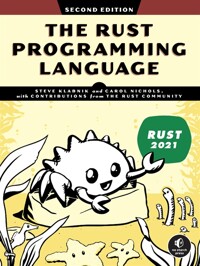
| 245 | 1 4 | ▼a The Rust programming language / ▼c by Steve Klabnik and Carol Nichols, with contributions from the Rust Community. |
| 250 | ▼a 2nd ed. | |
| 260 | ▼a San Francisco, CA : ▼b No Starch Press, ▼c 2023. | |
| 264 | 1 | ▼a San Francisco, CA : ▼b No Starch Press, ▼c [2023] |
| 264 | 4 | ▼c ©2023 |
| 300 | ▼a xxix, 527 p. : ▼b illustrations ; ▼c 24 cm. | |
| 336 | ▼a text ▼b txt ▼2 rdacontent | |
| 337 | ▼a unmediated ▼b n ▼2 rdamedia | |
| 338 | ▼a volume ▼b nc ▼2 rdacarrier | |
| 500 | ▼a "Rust 2021"--Cover. | |
| 500 | ▼a Previous edition: 2018. | |
| 500 | ▼a Includes index. | |
| 505 | 0 | ▼a Introduction -- Chapter 1:Getting Started -- Chapter 2: Programming a guessing game -- Chapter 3: Common Programming Concepts -- Chapter 4: Understanding Ownership -- Chapter 5: Using Structs to structure related data -- Chapter 6: Enums and Pattern Matching -- Chapter 7: Managing growing projects with packages, creates and modules -- Chapter 8: Common Collections -- Chapter 9: Error Handling -- Chapter 10: Generic Types, Traits, and Lifetimes -- Chapter 11: Writing automated tests -- Chapter 12: An I/O Project: building a command line program -- Chapter 13: Functional Language Features: Iterators and Closures -- Chapter 14: More about Cargo and Crates io -- Chapter 15: Smart Pointers -- Chapter 16: Fearless concurrency -- Chapter 17: Object Oriented programming features -- Chapter 18: Patterns and matching -- Chapter 19: More Advanced features -- Chapter 20: Final project: building a multithreaded web server -- Appendix A: Keywords -- Appendix B: Operators and symbols -- Appendix C: Derivable Traits -- Appendix D: Useful development tools -- Appendix E: Editions. |
| 520 | ▼a "The Rust Programming Language, 2nd Edition is the official guide to Rust 2021: an open source systems programming language that will help you write faster, more reliable software. Rust provides control of low-level details along with high-level ergonomics, allowing you to improve productivity and eliminate the hassle traditionally associated with low-level languages. Klabnik and Nichols, alumni of the Rust Core Team, share their knowledge to help you get the most out of Rust's features so that you can create robust and scalable programs. You'll begin with basics like creating functions, choosing data types, and binding variables, then move on to more advanced concepts. In addition to the countless code examples, you'll find three chapters dedicated to building complete projects: a number-guessing game, a Rust implementation of a command line tool, and a multithreaded server."--Publisher marketing. | |
| 650 | 0 | ▼a Rust (Computer program language). |
| 700 | 1 | ▼a Nichols, Carol, ▼d 1983- ▼0 AUTH(211009)163439. |
| 945 | ▼a ITMT |
소장정보
| No. | 소장처 | 청구기호 | 등록번호 | 도서상태 | 반납예정일 | 예약 | 서비스 |
|---|---|---|---|---|---|---|---|
| No. 1 | 소장처 과학도서관/Sci-Info(2층서고)/ | 청구기호 005.133 K63r2 | 등록번호 121267547 (2회 대출) | 도서상태 대출가능 | 반납예정일 | 예약 | 서비스 |
컨텐츠정보
책소개
With over 50,000 copies sold, The Rust Programming Language is the quintessential guide to programming in Rust. Thoroughly updated to Rust’s latest version, this edition is considered the language’s official documentation.
The Rust Programming Language "covers everything you could want to know about the language."—Stack Overflow
Rust has been repeatedly voted "Most Loved Language" on the StackOverflow Developer Survey.
The Rust Programming Language, 2nd Edition is the official guide to Rust 2021: an open source systems programming language that will help you write faster, more reliable software. Rust provides control of low-level details along with high-level ergonomics, allowing you to improve productivity and eliminate the hassle traditionally associated with low-level languages.
Klabnik and Nichols, alumni of the Rust Core Team, share their knowledge to help you get the most out of Rust’s features so that you can create robust and scalable programs. You’ll begin with basics like creating functions, choosing data types, and binding variables, then move on to more advanced concepts, such as:
- Ownership and borrowing, lifetimes, generics, traits, and trait objects to communicate your program’s constraints to the compiler
- Smart pointers and multithreading, and how ownership interacts with them to enable fearless concurrency
- How to use Cargo, Rust’s built-in package manager, to build, document your code, and manage dependencies
- The best ways to test, handle errors, refactor, and take advantage of expressive pattern matching
In addition to the countless code examples, you’ll find three chapters dedicated to building complete projects: a number-guessing game, a Rust implementation of a command line tool, and a multithreaded server.
Reviews
"The Rust Programming Language has always been, and continues to be, the first place I point anyone looking to learn Rust. It's referred to simply as "The Book", and with good reason -- it's comprehensive and elaborate, yet friendly and thoughtful, and serves as a guide not only to the language itself, but to the principles and mental models that Rust encourages its users to adopt. The 2nd edition is a reflection of the ongoing love for the book in the community, and ensures that it will remain a solid introduction to the best Rust has to offer for years to come."—Jon Gjengset, author of Rust for Rustaceans
"The Rust Programming Language, 2nd Edition has been improved, refined, and still remains *the book* to get started with learning Rust. Whether an experienced or a new Rustacean it's an invaluable resource on how Rust works."
—Michael Gattozzi, Senior Software Engineer at Fastly
"The Rust Programming Language, 2nd Edition, is a great resource for mastering Rust's fundamentals. Rust is a language that rewards a deep understanding of its features, from ownership rules to pattern matching, and this book is an excellent tool to achieve that. The project chapters are a particularly clever way to apply the material to real world programs, and the specific projects in them are well-chosen to avoid toy problems without being overwhelming. If you're thinking about seriously learning Rust, this book is for you."
—Adam Vartanian, Engineering Manager at Cord
"From a person who read the first edition front to back, the second edition of The Rust Programming Language met and exceeded my expectations! It's well-written and formatted to help introduce the reader to all the concepts of Rust. . . . this edition won't disappoint and is an excellent addition to a programmer's personal library."
—Jared Wolff, Owner, Circuit Dojo LLC
About the Author
Carol Nichols is a member of the Rust Community Team and a former member of the Rust Core Team. Also active in the Ruby community, she was a key organizer of the Steel City Ruby Conference 2012-2014.Steve Klabnik is the Community Team Leader for the Rust team at Mozilla, in charge of official Rust community documentation, as well as a trusted Rust community advocate. Klabnik is a frequent speaker at conferences and one of the world's most prolific contributors to Rails projects.
정보제공 :

저자소개
캐럴 니컬스(지은이)
러스트 커뮤니티 팀의 멤버이고, 이전에는 러스트 코어 팀의 멤버였다. 루비 커뮤니티에서도 활발히 활동 중이며, 2012~2014년 스틸 시티 루비 콘퍼런스의 핵심 주최자였다.
스티브 클라브닉(지은이)
모질라의 러스트 커뮤니티 팀 리더로서 공식적인 러스트 커뮤니티 문서를 담당하고 있고 신뢰받는 러스트 커뮤니티 애드버킷이기도 하다. 콘퍼런스에 발표자로 자주 참가하며, 루비 온 레일즈 프로젝트의 최다 기여자 중 한 명이다.
목차
Foreword
Preface
Acknowledgments
Introduction
Chapter 1: Getting Started
Chapter 2: Programming a Guessing Game
Chapter 3: Common Programming Concepts
Chapter 4: Understanding Ownership
Chapter 5: Using Structs to Structure Related Data
Chapter 6: Enums and Pattern Matching
Chapter 7: Managing Growing Projects with Packages, Crates, and Modules
Chapter 8: Common Collections
Chapter 9: Error Handling
Chapter 10: Generic Types, Traits, and Lifetimes
Chapter 11: Writing Automated Tests
Chapter 12: An I/O Project: Building a Command Line Program
Chapter 13: Functional Language Features: Iterators and Closures
Chapter 14: More About Cargo and Crates.io
Chapter 15: Smart Pointers
Chapter 16: Fearless Concurrency
Chapter 17: Object-Oriented Programming Features
Chapter 18: Patterns and Matching
Chapter 19: Advanced Features
Chapter 20: Final Project: Building a Multithreaded Web Server
Appendix A: Keywords
Appendix B: Operators and Symbols
Appendix C: Derivable Traits
Appendix D: Useful Development Tools
Appendix E: Editions
Index