

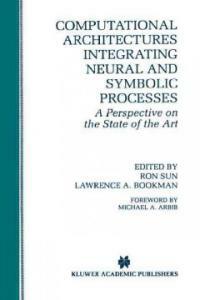
Computational architectures integrating neural and symbolic processes : a perspective on the state of the art
| 000 | 01007camuuu200277 a 4500 | |
| 001 | 000000472751 | |
| 003 | OCoLC | |
| 005 | 19970317142002.0 | |
| 008 | 940901s1994 maua b 001 0 eng | |
| 010 | ▼a 94033618 | |
| 020 | ▼a 0792395174 (acid-free paper) | |
| 040 | ▼a DLC ▼c DLC | |
| 049 | ▼a ACSL ▼l 121021102 | |
| 050 | 0 0 | ▼a QA76.87 ▼b .C665 1995 |
| 082 | 0 0 | ▼a 006.3 ▼2 20 |
| 090 | ▼a 006.3 ▼b C738 | |
| 245 | 0 0 | ▼a Computational architectures integrating neural and symbolic processes : ▼b a perspective on the state of the art / ▼c edited by Ron Sun, Lawrence A. Bookman. |
| 260 | ▼a Boston : ▼b Kluwer Academic, ▼c c1995. | |
| 300 | ▼a xviii, 475 p. : ▼b ill. ; ▼c 25 cm. | |
| 440 | 4 | ▼a The Kluwer international series in engineering and computer science ; ▼v SECS 292 |
| 504 | ▼a Includes bibliographical references and indexes. | |
| 650 | 0 | ▼a Neural networks (Computer science) |
| 650 | 0 | ▼a Artificial intelligence. |
| 650 | 0 | ▼a Computer architecture. |
| 700 | 1 | ▼a Sun, Ron, ▼d 1960- |
| 700 | 1 | ▼a Bookman, Lawrence A., ▼d 1947- |
소장정보
| No. | 소장처 | 청구기호 | 등록번호 | 도서상태 | 반납예정일 | 예약 | 서비스 |
|---|---|---|---|---|---|---|---|
| No. 1 | 소장처 과학도서관/Sci-Info(2층서고)/ | 청구기호 006.3 C738 | 등록번호 121021102 | 도서상태 대출가능 | 반납예정일 | 예약 | 서비스 |
컨텐츠정보
책소개
Computational Architectures Integrating Neural and Symbolic Processes: A Perspective on the State of the Art focuses on a currently emerging body of research. With the reemergence of neural networks in the 1980s with their emphasis on overcoming some of the limitations of symbolic AI, there is clearly a need to support some form of high-level symbolic processing in connectionist networks. As argued by many researchers, on both the symbolic AI and connectionist sides, many cognitive tasks, e.g. language understanding and common sense reasoning, seem to require high-level symbolic capabilities. How these capabilities are realized in connectionist networks is a difficult question and it constitutes the focus of this book.
Computational Architectures Integrating Neural and Symbolic Processes addresses the underlying architectural aspects of the integration of neural and symbolic processes. In order to provide a basis for a deeper understanding of existing divergent approaches and provide insight for further developments in this field, this book presents: (1) an examination of specific architectures (grouped together according to their approaches), their strengths and weaknesses, why they work, and what they predict, and (2) a critique/comparison of these approaches.
Computational Architectures Integrating Neural and Symbolic Processes is of interest to researchers, graduate students, and interested laymen, in areas such as cognitive science, artificial intelligence, computer science, cognitive psychology, and neurocomputing, in keeping up-to-date with the newest research trends. It is a comprehensive, in-depth introduction to this new emerging field.
Computational Architectures Integrating Neural and Symbolic Processes: A Perspective on the State of the Art focuses on a currently emerging body of research. With the reemergence of neural networks in the 1980s with their emphasis on overcoming some of the limitations of symbolic AI, there is clearly a need to support some form of high-level symbolic processing in connectionist networks. As argued by many researchers, on both the symbolic AI and connectionist sides, many cognitive tasks, e.g. language understanding and common sense reasoning, seem to require high-level symbolic capabilities. How these capabilities are realized in connectionist networks is a difficult question and it constitutes the focus of this book.
Computational Architectures Integrating Neural and Symbolic Processes addresses the underlying architectural aspects of the integration of neural and symbolic processes. In order to provide a basis for a deeper understanding of existing divergent approaches and provide insight for further developments in this field, this book presents: (1) an examination of specific architectures (grouped together according to their approaches), their strengths and weaknesses, why they work, and what they predict, and (2) a critique/comparison of these approaches.
Computational Architectures Integrating Neural and Symbolic Processes is of interest to researchers, graduate students, and interested laymen, in areas such as cognitive science, artificial intelligence, computer science, cognitive psychology, and neurocomputing, in keeping up-to-date with the newest research trends. It is a comprehensive, in-depth introduction to this new emerging field.
정보제공 :

목차
CONTENTS
List of Contributors = xi
Foreword by Michael Arbib = xiii
Preface = xvii
1 An Introduction; On Symbolic Processing in Neural Networks = 1
 1 Introduction = 1
 2 Brief Review = 4
 3 Existing Approaches = 5
 4 Issues and Difficulties = 7
 5 Future Directions, Or Where Should We Go From Here? = 11
 6 Overview of the Chapters = 12
 7 Summary = 15
 References = 16
Part I LOCALIST ARCHITECTURES = 19
 2 Complex Sympol - Processing in Conposit, A Transiently Localist Connectionist Archiecture = 21
  1 Introduction = 21
  2 The Johnson-Laird Theory and Its Challenges = 22
  3 Mental Models in Conposit = 31
  4 Connectionist Realization of Conposit = 48
  5 Coping with the Johnson-Laird Chalenge = 54
  6 Simulation Runs = 58
  7 Discussion = 62
  8 Summary = 64
  References = 65
 3 A Structured Connectionist Approach to Inferencing and Retrieval = 69
  1 Introduction = 69
  2 Language Understanding and Memory Retrieval Models = 74
  3 Inferencing in ROBIN = 82
  4 Episodic Retrieval in REMIND = 92
  5 Future Work = 102
  6 Summary = 110
  References = 111
 4 Hierarchical Architectures for Reasoning = 117
  1 Introduction = 117
  2 Computational Networks: A General Setting for Distributed Computations = 118
  3 Type x00 Computational Networks = 126
  4 Expert Systems = 129
  5 Expert Networks = 133
  6 Neural Networks = 140
  7 Summary = 143
  References =  145
Part Ⅱ DISTRIBUTED ARCHITECTURES = 151
 5 Subsymbolic Parsing of Embedded Structures = 153
  1 Introduction = 153
  2 Overview of Subsymbolic Sentence Processing = 155
  3 The SPEC Architecture = 158
  4 Experiments = 166
  5 Discussion = 177
  6 Summary = 179
  References = 180
 6 Towards Instructable Connectionist Systems = 187
  1 Introduction = 187
  2 Systematic Action = 192
  3 Linguistic Interaction = 200
  4 Learning By Instruction = 207
  5 Summary = 217
  References = 220
 7 An Internal Report for Connectionists = 223
  1 Introduction = 223
  2 The Origins of Connectionist Representation = 225
  3 Representation and Decision Space = 229
  4 Discussion = 240
  5 Summary = 242
  References = 243
Part Ⅲ COMBINED ARCHITECTURES = 245
 8 A Two-Level Hybrid Architecture for Structuring Knowledge for Commonsense Reasoning = 247
  1 Introduction = 247
  2 Developing A Two-Level Architecture = 250
  3 Fine-Tuning the Structure = 255
  4 Experiments = 264
  5 Comparisons with Other Approaches = 274
  6 Summary = 275
  References = 278
 9 A Framework for Integrating Relational and Associational Knowledge for Comprehension = 283
  1 Introduction = 283
  2 Overview of LeMICON = 287
  3 Text Comprehension = 289
  4 Encoding Semantic Memory = 296
  5 Representation of Semantic Constraints = 298
  6 Experiments and Results = 299
  7 Algorithm = 308
  8 Summary = 313
  References = 315
 10 Examining a Hybrid Connectionist / Symbolic System for the Analysis of Ballistic Signals = 319
  1 Introduction = 319
  2 Related Work in Hybrid Systems = 321
  3 Description of the SCRuFFY Architecture = 322
  4 Aalysis of Ballistic Signals = 325
  5 Future Work = 333
  6 Conclusion = 334
  References = 347
Part Ⅳ COMMENTARIES = 349
 11 Symbolic Artificial lntelligence and Numeric Artificial Neural Networks ; Towards a Resolution of the Dichotomy = 351
  1 Introduction = 351
  2 Shared Foundations of SAI and NANN = 353
  3 Knowledge Representation Revisited = 356
  4 A Closer Look at SAI and NANN = 360
  5 Integration of SAI and NANN = 374
  6 Summary = 375
  References = 378
 12 Connectionist Natural Language Processing ; A Status Report = 389
  1 Introduction = 389
  2 Dynamic Bindings = 391
  3 Functional Bindings and Structured Pattern Matching = 397
  4 Encoding and Accessing Recursive Structures = 398
  5 Forming Lexical Memories = 401
  6 Forming Semantic and Episodic Memories = 405
  7 Role of Working Memory = 407
  8 Routing and Control = 408
  9 Grounding Language in Perception = 413
  10 Future Directions = 418
  11 Conclusions = 421
  References = 423
Appendix Bibliography of Connectionist Models with Symbolic Processing = 431
Author Index = 457
Subject Index = 463
About The Editors = 475