

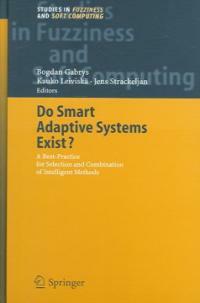
Do smart adaptive systems exist? : best practice for selection and combination of intelligent methods
| 000 | 01133camuu22003257a 4500 | |
| 001 | 000045224450 | |
| 005 | 20060223094458 | |
| 008 | 041117s2005 gw a b 000 0 eng d | |
| 010 | ▼a 2004116662 | |
| 020 | ▼a 9783540240778 | |
| 020 | ▼a 3540240772 | |
| 035 | ▼a (KERIS)REF000012363686 | |
| 040 | ▼a HKP ▼c HKP ▼d BAKER ▼d EMU ▼d DLC ▼d 211009 | |
| 042 | ▼a lccopycat | |
| 050 | 0 0 | ▼a QA76.9.A3 ▼b D627 2005 |
| 082 | 0 0 | ▼a 006.3 ▼2 22 |
| 090 | ▼a 006.3 ▼b D631 | |
| 245 | 0 0 | ▼a Do smart adaptive systems exist? : ▼b best practice for selection and combination of intelligent methods / ▼c Bogdan Gabrys, Kauko Leiviska, Jens Strackeljan (eds.). |
| 260 | ▼a Berlin : ▼b Springer , ▼c c2005. | |
| 300 | ▼a x, 370 p. : ▼b ill. ; ▼c 25 cm. | |
| 440 | 0 | ▼a Studies in fuzziness and soft computing ; ▼v v. 173 |
| 504 | ▼a Includes bibliographical references. | |
| 650 | 0 | ▼a Adaptive computing systems. |
| 650 | 0 | ▼a Artificial intelligence. |
| 650 | 0 | ▼a Adaptive control systems. |
| 700 | 1 | ▼a Gabrys, Bogdan. |
| 700 | 1 | ▼a Leiviska, Kauko. |
| 700 | 1 | ▼a Strackeljan, Jens. |
| 945 | ▼a KINS |
소장정보
| No. | 소장처 | 청구기호 | 등록번호 | 도서상태 | 반납예정일 | 예약 | 서비스 |
|---|---|---|---|---|---|---|---|
| No. 1 | 소장처 과학도서관/Sci-Info(2층서고)/ | 청구기호 006.3 D631 | 등록번호 121121615 | 도서상태 대출가능 | 반납예정일 | 예약 | 서비스 |
컨텐츠정보
책소개
Do Smart Adaptive Systems Exist? is intended as a reference and a guide summarising and focusing on best practices when using intelligent techniques and building systems requiring a degree of adaptation and intelligence.
It is therefore not intended as a collection of the most recent research results, but as a practical guide for experts from other areas and industrial users interested in building solutions to their problems using intelligent techniques. One of the main issues covered is an attempt to answer the question of how to select and/or combine suitable intelligent techniques from a large pool of potential solutions.
Another attractive feature of the book is that it brings together experts from neural network, fuzzy, machine learning, evolutionary and hybrid systems communities who will provide their views on how these different intelligent technologies have contributed and will contribute to creation of smart adaptive systems of the future.
Do Smart Adaptive Systems Exist? is intended as a reference and a guide summarising and focusing on best practices when using intelligent techniques and building systems requiring a degree of adaptation and intelligence.
It is therefore not intended as a collection of the most recent research results, but as a practical guide for experts from other areas and industrial users interested in building solutions to their problems using intelligent techniques. One of the main issues covered is an attempt to answer the question of how to select and/or combine suitable intelligent techniques from a large pool of potential solutions.
Another attractive feature of the book is that it brings together experts from neural network, fuzzy, machine learning, evolutionary and hybrid systems communities who will provide their views on how these different intelligent technologies have contributed and will contribute to creation of smart adaptive systems of the future.
New feature
This book is intended as a reference and a guide summarising and focusing on best practices when using intelligent techniques and building systems requiring a degree of adaptation and intelligence.
It is therefore not intended as a collection of the most recent research results but a practical guide for experts from other areas and industrial users who are interested in building solutions to their problems using intelligent techniques. One of the main issues covered is an attempt to answer the question of how to select and/or combine suitable intelligent techniques from a large pool of potential solutions.
Another attractive feature of the book is that it brings together experts from neural network, fuzzy, machine learning, evolutionary and hybrid systems communities who will provide their views on how these different intelligent technologies have contributed and will contribute to creation of smart adaptive systems of the future.
An integration of these communities has been one of the main goals of the European Network of Excellence on Smart Adaptive Systems (EUNITE) within which the idea of compiling such a volume has originated. Over three years of various EUNITE activities focusing on issues of adaptation and intelligent behaviour of computing and engineering systems has also led to posing the question which is the title of this book: Do smart adaptive systems exist?
정보제공 :

목차
Intelligent Systems: Architectures and Perspectives.- Do Smart Adaptive Systems Exist? - Introduction.- Problem Definition - From Applications to Methods.- Problem Definition - From Applications to Methods.- Data Preparation and Preprocessing.- Data Preparation and Preprocessing.- From Methods To Applications.- Artificial Neural Networks.- Machine Learning and Reinforcement Learning.- Fuzzy Expert Systems.- Learning Algorithms for Neuro-Fuzzy Systems.- Hybrid Intelligent Systems: Evolving Intelligence in Hierarchical Layers.- Evolving Connectionist Systems with Evolutionary Self-Optimisatio.- From Applications To Methods.- Monitoring.- Examples of Smart Adaptive Systems in Model-Based Diagnosis.- Design of Adaptive Fuzzy Controllers.- Optimal Design Synthesis of Component-Based Systems Using Intelligent Techniques.- Intelligent Methods in Finance Applications: From Questions to Solutions.- Neuro-Fuzzy Systems for Explaining Data Sets.- Fuzzy Linguistic Data Summaries as a Human Consistent, User Adaptable Solution to Data Mining.- Adaptive Multimedia Retrieval: From Data to User Interaction.
정보제공 :