

| 000 | 01780camuu2200289 a 4500 | |
| 001 | 000045697160 | |
| 005 | 20120322095730 | |
| 008 | 120321s2009 njua b 001 0 eng | |
| 010 | ▼a 2008018991 | |
| 020 | ▼a 9780470129340 (alk. paper) | |
| 035 | ▼a (KERIS)REF000015812336 | |
| 040 | ▼a DLC ▼c DLC ▼d DLC ▼d 211009 | |
| 050 | 0 0 | ▼a NA2750 ▼b .H27 2009 |
| 082 | 0 0 | ▼a 720.1 ▼2 22 |
| 084 | ▼a 720.1 ▼2 DDCK | |
| 090 | ▼a 720.1 ▼b H217e | |
| 100 | 1 | ▼a Hamilton, D. Kirk. |
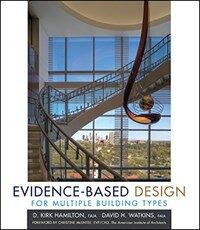
| 245 | 1 0 | ▼a Evidence-based design for multiple building types / ▼c D. Kirk Hamilton, David H. Watkins. |
| 260 | ▼a Hoboken, N.J. : ▼b John Wiley & Sons, Inc., ▼c c2009. | |
| 300 | ▼a xi, 272 p. : ▼b ill. ; ▼c 24 cm. | |
| 504 | ▼a Includes bibliographical references (p. 261-263) and index. | |
| 505 | 0 | ▼a What is evidence-based design? -- Precedent-based professions and transforming architecture -- The new practitioner -- Sustainable design is founded on evidence / by Lia Johnson -- Evidence-based medicine and healthcare design -- Evidence in the design of learning environments / by Alejandro Iriarte Dent -- Evidence and data in the design of workplace environments -- Data drives the design of retail environments -- Evidence-based environments for science -- Evidence in places for assembly and performance -- Evidence in historic preservation and adaptive reuse -- Evidence in urban planning -- Process and methods for evidence-based design -- Evidence sources and limitations -- The practitioner as researcher / by A. Ray Penecost III -- The challenges for architectural education -- Conclusion: architecture will always be knowledge-based. |
| 650 | 0 | ▼a Evidence-based design. |
| 650 | 0 | ▼a Architectural design. |
| 700 | 1 | ▼a Watkins, David H. |
| 945 | ▼a KLPA |
소장정보
| No. | 소장처 | 청구기호 | 등록번호 | 도서상태 | 반납예정일 | 예약 | 서비스 |
|---|---|---|---|---|---|---|---|
| No. 1 | 소장처 중앙도서관/서고7층/ | 청구기호 720.1 H217e | 등록번호 111660669 (7회 대출) | 도서상태 대출가능 | 반납예정일 | 예약 | 서비스 |
컨텐츠정보
책소개
Evidence-based design, which bases design decisions on the best available current research evidence, is gaining traction among architects. Expanding the field from its origins in healthcare to other building types such as education, criminal justice, commercial, industrial, and places of worship, this book introduces design professionals to the concept of evidence-based design and its use in the creation of high performance environments. It focuses on the methods by which design professionals and their clients can create better buildings by critically interpreting the implications of credible research and careful observation of completed projects. Drawing a direct link between evidence and application, the authors provide examples of credible research that supports evidence-based design are presented, as well as specific applications and case study examples.
New feature
"D. Kirk Hamilton, FAIA, and David H. Watkins, FAIA, have written this enlightening book showcasing the process and products of evidence-based design, a practice that should be in the top drawer of every architect's toolkit. Evidence-based design sounds a clarion call for more rigor in the knowledge-based practice of creating the built environment, as well as stronger collaboration and sharing of knowledge between client and designer. I can-t think of two people more qualified to have taken on this topic."
—From the Foreword by Christine McEntee, Executive Vice President/CEO, The American Institute of Architects
GAIN A COMPETITIVE ADVANTAGE FROM RESEARCH-BASED DESIGN
Evidence-based design enables architects and their clients to optimize design decisions via a process of gathering, evaluating, and applying current best evidence from research and practice. Written by leading experts in the field of evidence-based design, this book guides the reader through the complete process, culminating in the creation of high-performance environments, including:
- Locating the best available evidence from a variety of fields and sources
- Creating meaningful collaborations with clients and users for decision making
- Recognizing and responding to the unique context of each project
- Using critical thinking to interpret the implications of research
- Establishing a strong chain of logic that links research findings to design
In addition to providing general guidelines for the evidence-based design process, the authors describe how the process is applied in the design of specific building types, including hospitals, schools, offices, retail stores, and performance spaces. Throughout the book, examples underscore the effectiveness of credible research to support evidence-based design decisions. Moreover, comprehensive case studies are presented for each building type, demonstrating, for example, how design impacts a worker's productivity and efficiency or a student's ability to learn and achieve.
Following the authors' advice, architects, interior designers, facility managers, and related professionals will learn to create better, more effective designs by moving from an approach based on intuition and anecdotal information to one solidly based on evidence and outcomes.
정보제공 :

목차
Foreward By Chris McEntee.
Acknowledgements.
ntroduction.
PART I: THE CASE FOR EVIDENCE-BASED DESIGN.
Chapter 1: What is Evidence-Based Design?.
Chapter 2: Precedent-Based Professions & Transforming Architecture.
Chapter 3: The New Practitioner.
Chapter 4: Sustainable Design is Founded on Evidence (Lia Johnson).
PART II: EVIDENCE-BASED DESIGN FOR BUILDING TYPES.
Chapter 5: Evidence-Based Medicine and Healthcare Design.
Chapter 6: Evidence in the Design of Learning Environments (Alejandro Iriarte Dent).
Chapter 7: Evidence and Data in the Design of Workplace Environments.
Chapter 8: Data Drives the Design of Retail Environments.
Chapter 9: Evidence-Based Environments for Science.
Chapter 10: Evidence in Places for Assembly and Performance.
Chapter 11: Evidence in Historic Preservation & Adaptive Reuse.
Chapter 12: Evidence in Urban Planning.
PART III: DESIGNING WITH EVIDENCE.
Chapter 13: Process & Methods for Evidence-Based Design.
Chapter 14: Evidence Sources & Limitations.
Chapter 15: The Practitioner as Researcher (A. Ray Pentecost III).
Chapter 16: The Challenges for Architectural Education.
Conclusion: Architecture will always be Knowledge-Based.
Bibliography.
Index.
정보제공 :