

| 000 | 00000cam u2200205 a 4500 | |
| 001 | 000045870616 | |
| 005 | 20160428145743 | |
| 008 | 160427s2014 enka b 001 0 eng d | |
| 010 | ▼a 2013048906 | |
| 020 | ▼a 9780521871426 (hardcover) | |
| 020 | ▼a 9780521691918 (softcover) | |
| 035 | ▼a (KERIS)REF000017318515 | |
| 040 | ▼a DLC ▼b eng ▼c DLC ▼e rda ▼d DLC ▼d 211009 | |
| 050 | 0 0 | ▼a Q335 ▼b .C26 2014 |
| 082 | 0 0 | ▼a 006.3 ▼2 23 |
| 084 | ▼a 006.3 ▼2 DDCK | |
| 090 | ▼a 006.3 ▼b C178 | |
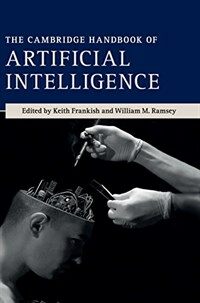
| 245 | 0 4 | ▼a The Cambridge handbook of artificial intelligence / ▼c edited by Keith Frankish and William M. Ramsey. |
| 246 | 3 0 | ▼a Handbook of artificial intelligence |
| 260 | ▼a Cambridge, UK : ▼b Cambridge University Press, ▼c 2014. | |
| 300 | ▼a xi, 354 p. : ▼b ill. ; ▼c 26 cm. | |
| 504 | ▼a Includes bibliographical references and index. | |
| 505 | 0 0 | ▼t History, motivations, and core themes / ▼r Stan Franklin -- ▼t Philosophical foundations / ▼r Konstantine Arkoudas and Selmer Bringsjord -- ▼t Philosophical challenges / ▼r William S. Robinson -- ▼t GOFAI / ▼r Margaret A. Boden -- ▼t Connectionism and neural networks / ▼r Ron Sun -- ▼t Dynamical systems and embedded cognition / ▼r Randall D. Beer -- ▼t Learning / ▼r David Danks -- ▼t Perception and computer vision / ▼r Markus Vincze, Sven Wachsmuth and Gerhard Sagerer -- ▼t Reasoning and decision making / ▼r Eyal Amir -- ▼t Language and communication / ▼r Yorick Wilks -- ▼t Actions and agents / ▼r Eduardo Alonso -- ▼t Artificial emotions and machine consciousness / ▼r Matthias Scheutz -- ▼t Robotics / ▼r Phil Husbands -- ▼t Artificial life / ▼r Mark A. Bedau -- ▼t The ethics of artificial intelligence / ▼r Nick Bostrom and Eliezer Yudkowsky. |
| 520 | ▼a "Artificial intelligence, or AI, is a cross-disciplinary approach to understanding, modeling, and creating intelligence of various forms. It is a critical branch of cognitive science, and its influence is increasingly being felt in other areas, including the humanities. AI applications are transforming the way we interact with each other and with our environment, and work in artificially modeling intelligence is offering new insights into the human mind and revealing new forms mentality can take. This volume of original essays presents the state of the art in AI, surveying the foundations of the discipline, major theories of mental architecture, the principal areas of research, and extensions of AI such as artificial life. With a focus on theory rather than technical and applied issues, the volume will be valuable not only to people working in AI, but also to those in other disciplines wanting an authoritative and up-to-date introduction to the field"-- ▼c Provided by publisher. | |
| 650 | 0 | ▼a Artificial intelligence ▼x Philosophy. |
| 700 | 1 | ▼a Frankish, Keith. |
| 700 | 1 | ▼a Ramsey, William M., ▼d 1960-. |
| 945 | ▼a KLPA |
소장정보
| No. | 소장처 | 청구기호 | 등록번호 | 도서상태 | 반납예정일 | 예약 | 서비스 |
|---|---|---|---|---|---|---|---|
| No. 1 | 소장처 중앙도서관/서고6층/ | 청구기호 006.3 C178 | 등록번호 111755839 (7회 대출) | 도서상태 대출가능 | 반납예정일 | 예약 | 서비스 |
컨텐츠정보
책소개
Artificial intelligence, or AI, is a cross-disciplinary approach to understanding, modeling, and creating intelligence of various forms. It is a critical branch of cognitive science, and its influence is increasingly being felt in other areas, including the humanities. AI applications are transforming the way we interact with each other and with our environment, and work in artificially modeling intelligence is offering new insights into the human mind and revealing new forms mentality can take. This volume of original essays presents the state of the art in AI, surveying the foundations of the discipline, major theories of mental architecture, the principal areas of research, and extensions of AI such as artificial life. With a focus on theory rather than technical and applied issues, the volume will be valuable not only to people working in AI, but also to those in other disciplines wanting an authoritative and up-to-date introduction to the field.
An authoritative, up-to-date survey of the state of the art in artificial intelligence, written for non-specialists.
정보제공 :

목차
Introduction Keith Frankish and William M. Ramsey; Part I. Foundations: 1. History, motivations, and core themes Stan Franklin; 2. Philosophical foundations Konstantine Arkoudas and Selmer Bringsjord; 3. Philosophical challenges William S. Robinson; Part II. Architectures: 4. GOFAI Margaret A. Boden; 5. Connectionism and neural networks Ron Sun; 6. Dynamical systems and embedded cognition Randall D. Beer; Part III. Dimensions: 7. Learning David Danks; 8. Perception and computer vision Markus Vincze, Sven Wachsmuth and Gerhard Sagerer; 9. Reasoning and decision making Eyal Amir; 10. Language and communication Yorick Wilks; 11. Actions and agents Eduardo Alonso; 12. Artificial emotions and machine consciousness Matthias Scheutz; Part IV. Extensions: 13. Robotics Phil Husbands; 14. Artificial life Mark A. Bedau; 15. The ethics of artificial intelligence Nick Bostrom and Eliezer Yudkowsky.
정보제공 :