

| 000 | 00000cam u2200205 a 4500 | |
| 001 | 000045468606 | |
| 005 | 20251120171819 | |
| 008 | 050317s2003 ne a b 001 0 eng | |
| 010 | ▼a 2003044506 | |
| 020 | ▼a 140201192X (hc. : alk. paper) | |
| 035 | ▼a (KERIS)BIB000009765255 | |
| 040 | ▼a DLC ▼c DLC ▼d DLC ▼d 222001 ▼d 244002 ▼d 211009 | |
| 042 | ▼a pcc | |
| 050 | 0 0 | ▼a QA76.87 ▼b .S618 2003 |
| 082 | 0 0 | ▼a 006.3/2 ▼2 22 |
| 090 | ▼a 006.32 ▼b S631c | |
| 100 | 1 | ▼a Slavova, Angela ▼0 AUTH(211009)176220. |
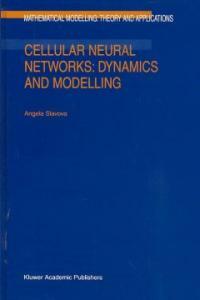
| 245 | 1 0 | ▼a Cellular neural networks : ▼b dynamics and modelling / ▼c by Angela Slavova. |
| 260 | ▼a Dordrecht, The Netherlands ; ▼a Boston : ▼b Kluwer Academic Publishers, ▼c c2003. | |
| 300 | ▼a x, 220 p. : ▼b ill. ; ▼c 25 cm. | |
| 440 | 0 | ▼a Mathematical modelling--theory and applications ; ▼v v. 16 |
| 504 | ▼a Includes bibliographical references (p. 203-216) and index. |
소장정보
| No. | 소장처 | 청구기호 | 등록번호 | 도서상태 | 반납예정일 | 예약 | 서비스 |
|---|---|---|---|---|---|---|---|
| No. 1 | 소장처 세종학술정보원/학과비치/ | 청구기호 정보수학과 006.32 S631c | 등록번호 151261569 | 도서상태 대출불가(열람가능) | 반납예정일 | 예약 | 서비스 |
컨텐츠정보
책소개
Conventional digital computation methods have run into a se rious speed bottleneck due to their serial nature. To overcome this problem, a new computation model, called Neural Networks, has been proposed, which is based on some aspects of neurobiology and adapted to integrated circuits. The increased availability of com puting power has not only made many new applications possible but has also created the desire to perform cognitive tasks which are easily carried out by the human brain. It become obvious that new types of algorithms and/or circuits were necessary to cope with such tasks. Inspiration has been sought from the functioning of the hu man brain, which led to the artificial neural network approach. One way of looking at neural networks is to consider them to be arrays of nonlinear dynamical systems that interact with each other. This book deals with one class of locally coupled neural net works, called Cellular Neural Networks (CNNs). CNNs were intro duced in 1988 by L. O. Chua and L. Yang [27,28] as a novel class of information processing systems, which posseses some of the key fea tures of neural networks (NNs) and which has important potential applications in such areas as image processing and pattern reco gnition. Unfortunately, the highly interdisciplinary nature of the research in CNNs makes it very difficult for a newcomer to enter this important and fasciriating area of modern science.
Conventional digital computation methods have run into a se rious speed bottleneck due to their serial nature. To overcome this problem, a new computation model, called Neural Networks, has been proposed, which is based on some aspects of neurobiology and adapted to integrated circuits. The increased availability of com puting power has not only made many new applications possible but has also created the desire to perform cognitive tasks which are easily carried out by the human brain. It become obvious that new types of algorithms and/or circuits were necessary to cope with such tasks. Inspiration has been sought from the functioning of the hu man brain, which led to the artificial neural network approach. One way of looking at neural networks is to consider them to be arrays of nonlinear dynamical systems that interact with each other. This book deals with one class of locally coupled neural net works, called Cellular Neural Networks (CNNs). CNNs were intro duced in 1988 by L. O. Chua and L. Yang [27,28] as a novel class of information processing systems, which posseses some of the key fea tures of neural networks (NNs) and which has important potential applications in such areas as image processing and pattern reco gnition. Unfortunately, the highly interdisciplinary nature of the research in CNNs makes it very difficult for a newcomer to enter this important and fasciriating area of modern science.
정보제공 :

목차
Preface. 1: Basic theory about CNNs. 1.1. Introduction to the CNN paradigm. 1.2. Main types of CNN equations. 1.3. Theorems and results on CNN stability. 1.4. Examples. 2: Dynamics of nonlinear and delay CNNs. 2.1. Nonlinear CNNs. 2.2. CNN with delay. 2.3. Examples. 3: Hysteresis and chaos in CNNs. 3.1. CNNs with hystersis in the feedback system. 3.2. Nonlinear CNNs with hysteresis in the output dynamics. 3.3. Feedback and hysteresis. 3.4. Control of chaotic CNNs. 4: CNN modelling in biology, physics and ecology. 4.1. Modelling PDEs via CNNs. 4.2. CNN model of Sine-Gordon equation. 4.3. CNN model of FitzHugh-Nagumo equation. 4.4. CNN model of Fisher's equation. 4.5. CNN model of Brusselator equation. 4.6. CNN model of Toda Lattice equation. 4.7. Lotka-Volterra equation and its CNN model. 5: Appendix A: Topological degree method. 6: Appendix B: Hysteresis and its models. 7: Appendix C: Describing function method and its application for analysis of Cellular Neural Networks. References. Index.
정보제공 :