

| 000 | 00000cam u2200205 a 4500 | |
| 001 | 000000769864 | |
| 005 | 20240320162009 | |
| 008 | 990331s1999 nyua b 001 0 eng d | |
| 010 | ▼a 96037068 | |
| 020 | ▼a 0393317552 (pbk.) : ▼c $14.95 | |
| 040 | ▼a BKL ▼c BKL ▼d NRM ▼d UBA ▼d QP9 ▼d 211009 | |
| 049 | 1 | ▼l 111215131 |
| 082 | 0 4 | ▼a 303.4 ▼2 21 |
| 090 | ▼a 303.4 ▼b D537g | |
| 100 | 1 | ▼a Diamond, Jared M., ▼d 1937- ▼0 AUTH(211009)104315. |
| 245 | 1 0 | ▼a Guns, germs, and steel : ▼b the fates of human societies / ▼c Jared Diamond. |
| 250 | ▼a 1st Norton pbk. ed. | |
| 260 | ▼a New York : ▼b W.W. Norton Co., ▼c c1999. | |
| 300 | ▼a 480 p., [32] p. of plates : ▼b ill., maps ; ▼c 24 cm. | |
| 504 | ▼a Includes bibliographical references (p. 429-457) and index. | |
| 505 | 0 | ▼a Yali's question: The regionally differing courses of history -- From Eden to Cajamarca. Up to the starting line: What happened on all the continents before 11,000 B.C.? -- A natural experiment of history: How geography molded societies on the Polynesian islands -- Collision at Cajamarca: Why the Inca emperor Atahuallpa did not capture King Charles I of Spain -- The rise and spread of food production. Farmer power: The roots of guns, germs, and steel -- History's haves and have-nots: Geographic differences in the onset of food production -- To farm or not to farm: Causes of the spread of food production -- How to make an almond: The unconscious development of ancient crops -- Apples or indians: Why did peoples of some regions fail to domesticate plants? -- Zebras, unhappy marriages, and the Anna Karenina principle: Why were most big wild mammal species never domesticated? -- Spacious skies and tilted axes: Why did food production spread at different rates on different continents? -- From food to guns, germs, and steel. Lethal gift of livestock: The evolution of germs -- Blueprints and borrowed letters: The evolution of writing -- Necessity's mother: The evolution of technology -- From egalitarianism to kleptocracy: The evolution of government and religion -- Around the world in five chapters. Yali's people: The histories of Australia and New Guinea -- How China became Chinese: The history of East Asia -- Speedboat to Polynesia: The history of Austronesian expansion -- Hemispheres colliding: The histories of Eurasia and the Americas compared -- How Africa became black: The history of Africa -- The future of human history as a science. |
| 650 | 0 | ▼a Social evolution. |
| 650 | 0 | ▼a Civilization ▼x History. |
| 650 | 0 | ▼a Ethnology. |
| 650 | 0 | ▼a Human beings ▼x Effect of environment on. |
| 650 | 0 | ▼a Culture diffusion. |
소장정보
| No. | 소장처 | 청구기호 | 등록번호 | 도서상태 | 반납예정일 | 예약 | 서비스 |
|---|---|---|---|---|---|---|---|
| No. 1 | 소장처 중앙도서관/서고6층/ | 청구기호 303.4 D537g | 등록번호 111215131 (58회 대출) | 도서상태 대출가능 | 반납예정일 | 예약 | 서비스 |
| No. 2 | 소장처 중앙도서관/서고6층/ | 청구기호 303.4 D537g | 등록번호 141033049 (15회 대출) | 도서상태 대출중 | 반납예정일 2018-09-29 | 예약 | 서비스 |
| No. 3 | 소장처 중앙도서관/교육보존C/서양서 | 청구기호 303.4 D537g | 등록번호 141033048 (26회 대출) | 도서상태 대출가능 | 반납예정일 | 예약 | 서비스 |
컨텐츠정보
책소개
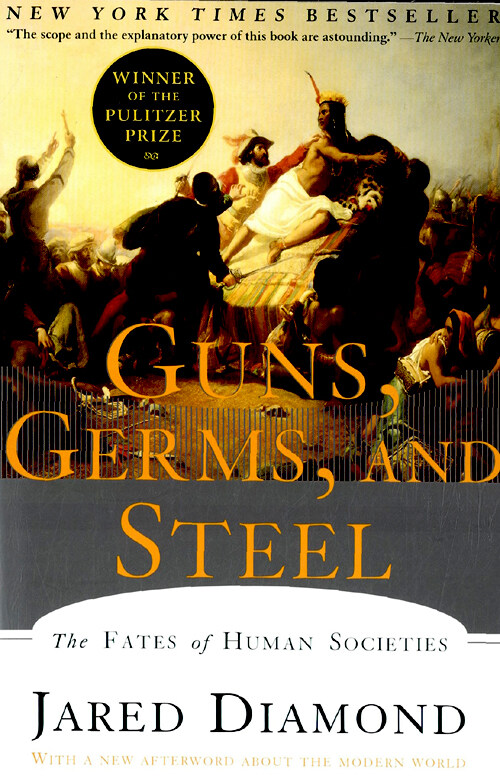
왜 어떤 민족들은 다른 민족들의 정복과 지배의 대상으로 전락하고 말았는가? 왜 원주민들은 유라시아인들에 의해 도태되고 말았는가? 왜 각 대륙들마다 문명의 발달 속도에 차이가 생겨났는가? 인간 사회의 다양한 문명은 어디에서 비롯되었는가? 1998년 퓰리처 상을 수상한 이 책은 이런 의문을 명쾌하게 분석한 명저이다.
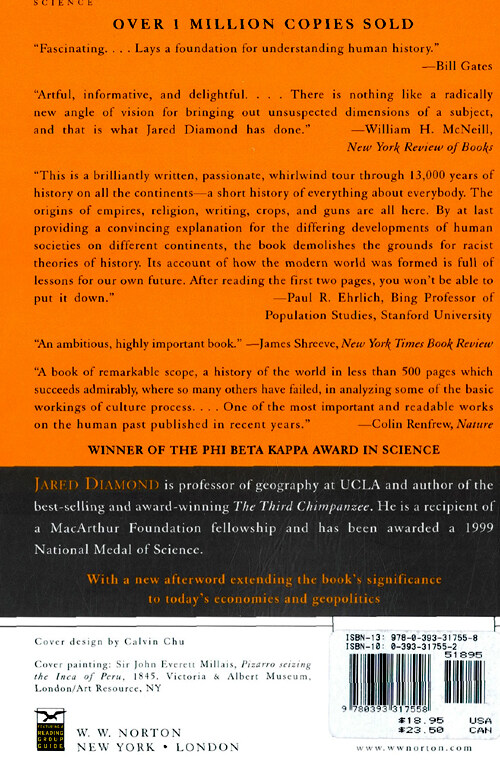
진화생물학자인 재레드 다이아몬드는 각 대륙의 문명이 서로 다른 길을 걷게 된 이유가 인종적.민족적 차이 때문이 아니라 환경적 요소들 때문이라는 것을 생태지리학, 생태학, 유전학, 병리학, 문화인류학, 언어학 등을 동원해 설득력 있게 밝힘으로써 인종주의적 이론의 기반을 무너뜨린다.
정보제공 :

저자소개
재레드 다이아몬드(지은이)
1937년 미국 보스턴에서 출생했다. 록스버리 라틴스쿨과 하버드대학교를 졸업한 뒤 영국 케임브리지대학교에서 생리학 박사 학위를 받았다. 하버드대학교 생물물리학 연구실을 거쳐 UCLA 생리학 교수로 재직했다. 1964년 뉴기니에서 조류를 관찰하며 진화생물학 연구를 시작했다. 이후 지리학, 생물지리학, 생태계와 인간의 상호작용을 연구하는 환경사(史), 문화인류학 등으로 연구 영역을 확장해나갔다. 현재 UCLA 지리학과 교수로 있으며 여전히 학생들에게 지리학을 가르치고 있다. 2005년 영국 〈프로스펙트〉와 미국 〈포린폴리시〉가 공동 발표한 ‘세계를 이끄는 최고의 지식인’ 중 아홉 번째 인물로 선정되었다. 전미과학상, 타일러 환경공로상, 영국 과학출판상, 일본 코스모스상, 록펠러대학교의 루이스 토머스상을 수상했다. 라틴어, 그리스어, 독일어, 이탈리아어, 인도네시아어 등 수 개 국어를 구사하며, 〈네이처〉 〈내추럴 히스토리〉 〈디스커버〉 등 과학 전문지에 200편이 넘는 글을 기고했다. 대표 저서로 1998년 퓰리처상을 받은 《총, 균, 쇠》를 비롯해, 《제3의 침팬지》 《문명의 붕괴》 《어제까지의 세계》 《나와 세계》 《대변동》 등이 있다.
목차
reface to the Paperback Edition

Prologue: Yali's Question


The Regionally Differing Courses of History

PART ONE: FROM EDEN TO CAJAMARCA


Chapter 1: Up to the Starting Line

What Happened on all the Continents before 11,000 B.C.?

Chapter 2: A Natural Experiment of History

How Geography Molded Societies on Polynesian Islands

Chapter 3: Collision at Cajamarca

Why the Inca Emperor Atahuallpa did not Capture King Charles I of Spain

PART TWO: THE RISE AND SPREAD OF FOOD PRODUCTION


Chapter 4: Farmer Power

The Roots of Guns, Germs, and Steel

Chapter 5: History's Haves and Have-Nots

Geographic Differences in the Onset of Food Production

Chapter 6: To Farm or Not to Farm

Causes of the Spread of Food Production

Chapter 7: How to Make an Almond

The Unconscious Development of Ancient Crops

Chapter 8: 8 Apples or Indians

Why did Peoples of Some Regions Fail to Domesticate Plants?

Chapter 9: Zebras, Unhappy Marriages, and the Anna Karenina Principle

Why were most Big Wild Mammal Species Never Domesticated?

Chapter 10: Spacious Skies and Tilted Axes

Why did Food Production Spread at Different Rates on Different Continents?

PART THREE: FROM FOOD TO GUNS, GERMS, AND STEEL


Chapter 11: Lethal Gift of Livestock

The Evolution of Germs

Chapter 12: Blueprints and Borrowed Letters

The Evolution of Writing

Chapter 13: Necessity's Mother

The Evolution of Technology

Chapter 14: From Egalitarianism to Kleptocracy

The Evolution of Government and Religion

PART FOUR: AROUND THE WORLD IN FIVE CHAPTERS


Chapter 15: Yali's People

The Histories of Australia and New Guinea

Chapter 16: How China became Chinese

The History of East Asia

Chapter 17: Speedboat to Polynesia

The History of the Austronesian Expansion

Chapter 18: Hemispheres Colliding

The Histories of Eurasia and the Americas Compared

Chapter 19: How Africa became Black

The History of Africa

Epilogue: The Future of Human History as a Science


Acknowledgments

Further Readings

Credits

Index
정보제공 :