


| 000 | 00000cam u2200205 a 4500 | |
| 001 | 000045627829 | |
| 005 | 20240229150929 | |
| 008 | 110127s2010 gw a b 000 0 eng d | |
| 015 | ▼a GBB058966 ▼2 bnb | |
| 020 | ▼a 9783836524858 (hbk.) | |
| 020 | ▼a 3836524856 (hbk.) | |
| 040 | ▼a StDuBDS ▼b eng ▼c StDuBDS ▼d 211009 | |
| 082 | 0 4 | ▼a 759.3 ▼2 22 |
| 084 | ▼a 759.3 ▼2 DDCK | |
| 090 | ▼a 759.3 ▼b D619k | |
| 100 | 1 | ▼a Karcher, Eva. |
| 245 | 1 0 | ▼a Otto Dix : ▼b 1891-1969 / ▼c Eva Karcher ; [edited by Ingo F. Walther]. |
| 246 | 1 4 | ▼a Dix |
| 260 | ▼a Koln ; ▼a London : ▼b Taschen, ▼c c2010. | |
| 300 | ▼a 216 p. : ▼b ill. (chiefly col.) ; ▼c 31 cm. | |
| 504 | ▼a Includes bibliographical references. | |
| 600 | 1 0 | ▼a Dix, Otto, ▼d 1891-1969 ▼x Criticism and interpretation. |
| 600 | 1 0 | ▼a Dix, Otto, ▼d 1891-1969. |
| 700 | 1 | ▼a Walther, Ingo F., ▼d 1940-2007 ▼0 AUTH(211009)93125. |
| 945 | ▼a KLPA |
Holdings Information
| No. | Location | Call Number | Accession No. | Availability | Due Date | Make a Reservation | Service |
|---|---|---|---|---|---|---|---|
| No. 1 | Location Main Library/Western Books/ | Call Number 759.3 D619k | Accession No. 111609860 (6회 대출) | Availability Available | Due Date | Make a Reservation | Service |
Contents information
Book Introduction
객관주의자
희곡처럼 묘사한 세계
"우리가 살고 있는 시간 속으로 예술적인 교의에 굴복하지 않고 보다 깊게, 아주 가까이 다가가는 것이 나의 소망이다. 나는 감성을 보여줄 수 있는 연결 고리, 그리고 추악함과 있는 그대로의 삶을 묘사할 수 있는 용기가 필요하다." - 오토 딕스
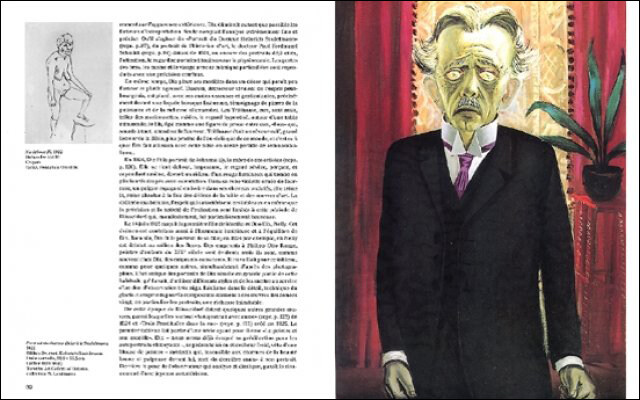
1920년대, 오토 딕스는 신즉물주의를 추구하는 뛰어난 아티스트였다. 제1차 세계 대전 당시 군인으로서 경험했던 빈곤, 폭력, 죽음 그리고 전쟁을 주제로 현실적이고 사진과 같은 묘사로 작품을 표현했다. 이 끔찍한 경험 끝에, 그는 세 폭짜리 연작인 『The War』를 완성했다.
딕스는 세상을 익살극, 희곡처럼 묘사했다. 아름다움에 대한 고전적인 규범을 바탕으로 작품 형식을 선택했다. "인생은 인생이고, 예술은 예술일 뿐이다."라고 주장한 미국의 화가인 애드 라인하트의 오래된 원칙을 따르기 위한 삶과 예술을 원했다.
상세 이미지




Life is life, and art is art.
"It is my wish to come very close, strikingly close, to the times in which we live, without submitting to artistic dogma...I need the connection to the world of senses, the courage to portray ugliness, life as it comes." - Otto Dix
In the 1920s, Otto Dix was the artist of Neue Sachlichkeit, the New Objectivity, par excellence. Painting in a very realistic, almost photographic style, he chose as subjects the poverty, violence, death, and war that he experienced as a soldier in World War I. After this terrible experience, he painted the famous triptych The War.
Dix staged the world as a play, a grotesque farce. But the form he chose to do so was based on the classical canon of beauty. Dix lived his life and served art, for he adhered to the age-old rule that the American painter Ad Reinhardt put in a nutshell: "Life is life, and art is art."
Information Provided By: :

Author Introduction
Eva Karcher(지은이)
Eva Karcher는 지난 15년간 현대 미술을 전문적으로 다루는 기자로 일하고 있다. 『Vogue』, 『Focus』, 『Bunte』, 『AD』, 『SZ, 『Die Zeit』, 『Der Tagesspiegel』등의 잡지와 신문에 글을 기고하고 있다. 다수의 책을 출간했고, 미술품 투자자와 부호들을 위한 새로운 잡지 형태를 고심하고 있다. 또한 각종 전시를 기획하며, 갤러리, 회사, 개인 콜렉터들을 위한 아트 컨설턴트로도 활동중이다.