

| 000 | 00000cam u2200205 a 4500 | |
| 001 | 000045909769 | |
| 005 | 20170706173546 | |
| 008 | 170705s2017 nyua b 001 0 eng d | |
| 010 | ▼a 2016047087 ▼z 2016049640 | |
| 020 | ▼a 9780190264604 (hardback) | |
| 020 | ▼a 9780190264628 (epub) | |
| 035 | ▼a (KERIS)REF000018278609 | |
| 040 | ▼a DLC ▼b eng ▼e rda ▼c DLC ▼d 211009 | |
| 050 | 0 0 | ▼a AZ362 ▼b .D74 2017 |
| 082 | 0 0 | ▼a 001.1 ▼2 23 |
| 084 | ▼a 001.1 ▼2 DDCK | |
| 090 | ▼a 001.1 ▼b D778i | |
| 100 | 1 | ▼a Drezner, Daniel W. |
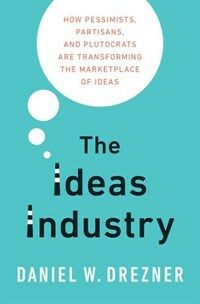
| 245 | 1 4 | ▼a The ideas industry / ▼c Daniel W. Drezner. |
| 260 | ▼a New York, NY : ▼b Oxford University Press, ▼c c2017. | |
| 300 | ▼a xi, 344 p. : ▼b ill. ; ▼c 25 cm. | |
| 504 | ▼a Includes bibliographical references (p. 317-330) and index. | |
| 505 | 8 | ▼a Machine generated contents note: -- Introduction: The Transmogrification -- Chapter 1: Do Ideas Even Matter? -- Chapter 2: How Pessimists, Partisans, and Plutocrats are Changing the Marketplace of Ideas -- Chapter 3: The Standard Indictment Against the Academy -- Chapter 4: The Disciplines: Why Economics Thrives While Political Science Survives -- Chapter 5: This is Not Your Father's Think Tank -- Chapter 6: The Booming Private Market for Public Ideas. |
| 520 | ▼a " The public intellectual, as a person and ideal, has a long and storied mythology. Writing in venues like the New Republic and Foreign Affairs, they are expected to opine on a broad array of topics, from foreign policy to literature to economics. Yet in recent years a new kind of thinker has supplanted that archetype: the thought leader. Equipped with one big idea, thought leaders focus their energies on TED talks more than highbrow periodicals. How did this shift happen? In The Ideas Industry, Daniel W. Drezner points to the roles of political polarization, heightened inequality, and eroding trust in authority as ushering in the change. In contrast to public intellectuals, thought leaders gain fame as single-idea merchants. Their ideas are often laudable and highly ambitious: ending global poverty by 2025, for example. But instead of a class composed of university professors and freelance intellectuals debating in highbrow magazines, thought leaders can bypass traditional gatekeepers to directly influence policymakers and the public. They are more immune to criticism--and in this century, the criticism of public intellectuals also counts for less. Three factors have reshaped the world of ideas: waning trust in expertise, increasing political polarization and rising levels of plutocracy. The erosion of trust has lowered the barriers to entry in the marketplace of ideas. Thought leaders don't need doctorates or fellowships to advance their arguments. Polarization is hardly a new phenomenon, but in contrast to their predecessors, today's intellectuals are more likely to enjoy the support of ideologically friendly private funders and be housed in ideologically-driven think tanks. Increasing inequality is a key driver: more than ever before, contemporary plutocrats fund intellectuals and policy shops that generate arguments that align with their own. There are downsides to the contemporary ideas industry, but Drezner argues that it is very good at broadcasting ideas widely and reaching large audiences of people hungry for new thinking. Both fair-minded and trenchant, The Ideas Industry will reshape our understanding of contemporary public intellectual life in America and the West."-- ▼c Provided by publisher. | |
| 520 | ▼a "Daniel W. Drezner's The Ideas Industry traces the trajectory of the public intellectual from the early 20th century to its present form of the "thought leader." It will reshape our understanding of contemporary public intellectual life in America and the West"-- ▼c Provided by publisher. | |
| 650 | 0 | ▼a Intellectual life ▼x Political aspects. |
| 650 | 0 | ▼a Intellectuals ▼x Political activity. |
| 650 | 0 | ▼a Learning and scholarship ▼x Political aspects. |
| 650 | 0 | ▼a Research institutes ▼x Political aspects. |
| 650 | 0 | ▼a Knowledge, Sociology of. |
| 945 | ▼a KLPA |
소장정보
| No. | 소장처 | 청구기호 | 등록번호 | 도서상태 | 반납예정일 | 예약 | 서비스 |
|---|---|---|---|---|---|---|---|
| No. 1 | 소장처 중앙도서관/서고6층/ | 청구기호 001.1 D778i | 등록번호 111775668 (1회 대출) | 도서상태 대출가능 | 반납예정일 | 예약 | 서비스 |
컨텐츠정보
책소개
Daniel W. Drezner'sThe Ideas Industry traces the trajectory of the public intellectual from the early 20th century to its present form of the "thought leader." It will reshape our understanding of contemporary public intellectual life in America and the West.
The concept of the "public intellectual" has a rich and colorful history. It began in the early twentieth century, when the new mass media catapulted intellectuals who were able to write for the general public to semi-stardom. The first wave included figures like Walter Lippmann?who coined the term "stereotype" and is widely considered the founder of media studies?and by the 1950s, public intellectuals as a species had become a powerful and influential force in the
American cultural landscape. By the 1970s, the standard definition of the public intellectual had solidified: a person (often university-affiliated, but not always) able to discuss and dispute any serious issue, typically in venues like The New York Review of Books, and occasionally influence
politics.
The traditional definition of the public intellectual remains with us, but as Daniel W. Drezner shows in The Ideas Industry, it has been gradually supplanted by a new model in recent years: the "thought leader." In contrast to public intellectuals, thought leaders gain fame as purveyors of a single big idea. Also, instead of battling it out with intellectual combatants in the pages of The Partisan Review, The Public Interest, and their descendants, they often work
through institutions that are closed to the public and which release information selectively. Thought leaders and their associated ideas tend to become brands?hedgehogs to the public intellectual fox. They have also proven to be quite successful, as evidenced by TED, Aspen Ideas, the Clinton Global Initiative, and the like.
Furthermore, they often align with one side of a politically polarized debate and enjoy the support of ideologically friendly private funders. Drezner identifies increasing inequality as a prime mover of this shift, contending that our present-day class of plutocrats not only wants to go back to school, it wants to force "schools"-in the form of intellectuals with elite affiliations-to come to them. And they have the money to make this happen. Drezner, however, does not see the phenomenon as
necessarily negative. While there are certainly some downsides to the contemporary ideas industry, he argues that it is very good at broadcasting intellectual content widely and reaching large audiences of people hungry for new thinking. Both fair-minded and trenchant, The Ideas Industry will reshape
our understanding of contemporary public intellectual life in America and the West.
정보제공 :

목차
Introduction. The transmogrification
1. Do ideas even matter?
2. How pessimists, partisans, and plutocrats are changing the marketplace of ideas
3. The standard indictment against the academy
4. The disciplines : why economics thrives while political science survives
5. This is not your father''s think tank
6. The booming private market for public ideas
7. The promise and perils of intellectual brands
8. Is the ideas industry working?
9. Tweeting ideas : or, the requisite chapter on social media
Conclusion. The Dark Knight theory of the ideas industry.