

| 000 | 00000cam u2200205 a 4500 | |
| 001 | 000045975747 | |
| 005 | 20240801134131 | |
| 008 | 190314s2018 nyuac b 001 0 eng d | |
| 010 | ▼a 2017049274 | |
| 020 | ▼a 9780374287863 (hardcover) | |
| 035 | ▼a (KERIS)REF000018509859 | |
| 040 | ▼a DNLM/DLC ▼c DLC ▼e rda ▼d DLC ▼d 211009 | |
| 050 | 0 0 | ▼a RC454 ▼b .K346 2018 |
| 082 | 0 0 | ▼a 616.89 ▼2 23 |
| 084 | ▼a 616.89 ▼2 DDCK | |
| 090 | ▼a 616.89 ▼b K162d | |
| 100 | 1 | ▼a Kandel, Eric R., ▼d 1929- ▼0 AUTH(211009)16076. |
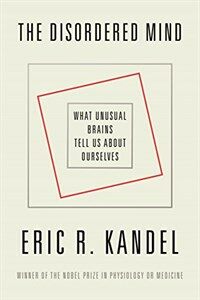
| 245 | 1 4 | ▼a The disordered mind : ▼b what unusual brains tell us about ourselves / ▼c Eric R. Kandel. |
| 250 | ▼a First edition. | |
| 260 | ▼a New York : ▼b Farrar, Straus and Giroux, ▼c c2018. | |
| 300 | ▼a 285 p. : ▼b ill. (some col.), port. ; ▼c 24 cm. | |
| 504 | ▼a Includes bibliographical references and index. | |
| 505 | 0 | ▼a What brain disorders can tell us about ourselves -- Our intensely social nature : the autism spectrum -- Emotions and the integrity of the self : depression and bipolar disorder -- The ability to think and to make and carry out decisions : schizophrenia -- Memory, the storehouse of the self : dementia -- Our intrinsic creative capability : brain disorders and art -- Movement : Parkinson's and Huntington's diseases -- The interplay of conscious and unconscious emotion : anxiety, post-traumatic stress, and faulty decision-making -- The pleasure principle and freedom of choice: addictions -- That's all, folks -- Sexual differentiation of the brain and gender identity -- Consciousness : the great remaining mystery of the brain -- Conclusion : coming full circle. |
| 650 | 1 2 | ▼a Mental Disorders ▼x physiopathology. |
| 650 | 1 2 | ▼a Neuropsychiatry ▼x methods. |
| 650 | 2 2 | ▼a Mental Processes ▼x physiology. |
| 650 | 2 2 | ▼a Psychophysiologic Disorders ▼x physiopathology. |
| 945 | ▼a KLPA |
Holdings Information
| No. | Location | Call Number | Accession No. | Availability | Due Date | Make a Reservation | Service |
|---|---|---|---|---|---|---|---|
| No. 1 | Location Science & Engineering Library/Sci-Info(Stacks2)/ | Call Number 616.89 K162d | Accession No. 121248279 | Availability Available | Due Date | Make a Reservation | Service |
Contents information
Book Introduction
A Nobel Prize-winning neuroscientist's probing investigation of what brain disorders can tell us about human nature
Eric R. Kandel, the winner of the Nobel Prize in Physiology or Medicine for his foundational research into memory storage in the brain, is one of the pioneers of modern brain science. His work continues to shape our understanding of how learning and memory work and to break down age-old barriers between the sciences and the arts. In his seminal new book, The Disordered Mind, Kandel draws on a lifetime of pathbreaking research and the work of many other leading neuroscientists to take us on an unusual tour of the brain. He confronts one of the most difficult questions we face: How does our mind, our individual sense of self, emerge from the physical matter of the brain? The brain's 86 billion neurons communicate with one another through very precise connections. But sometimes those connections are disrupted. The brain processes that give rise to our mind can become disordered, resulting in diseases such as autism, depression, schizophrenia, Parkinson's, addiction, and post-traumatic stress disorder. While these disruptions bring great suffering, they can also reveal the mysteries of how the brain produces our most fundamental experiences and capabilities--the very nature of what it means to be human. Studies of autism illuminate the neurological foundations of our social instincts; research into depression offers important insights on emotions and the integrity of the self; and paradigm-shifting work on addiction has led to a new understanding of the relationship between pleasure and willpower. By studying disruptions to typical brain functioning and exploring their potential treatments, we will deepen our understanding of thought, feeling, behavior, memory, and creativity. Only then can we grapple with the big question of how billions of neurons generate consciousness itself.Information Provided By: :

Author Introduction
에릭 캔델(지은이)
세계적인 뇌과학자, 저술가. 기억의 신경학적 메커니즘을 밝힌 공로로 2000년 노벨생리의학상을 수상했다. 1929년 오스트리아 빈의 유대인 가정에서 태어난 그는 아홉 살 때 나치의 위협이 점점 심해지자 가족과 함께 미국으로 망명했다. 하버드대학교에서 역사와 문학을 전공한 뒤, 1952년 뉴욕대학교에서 의학박사 과정을 밟아 과학자의 길을 걷기 시작했다. 현재 컬럼비아대학교의 원로 석좌교수이며, 생리학ㆍ세포생물리학ㆍ정신의학ㆍ생화학ㆍ분자생물리학ㆍ신경과학 명예교수이다. 주커먼 연구소Zuckerman Institute와 카블리 뇌과학 연구소Kavli Institute for Brain Science의 공동 창립 이사이고, 1984년부터 2022년까지 하워드 휴즈 의학연구소의 수석 연구원으로 있었다. 지은 책으로 무의식의 세계를 과학, 예술, 인문학을 넘나들며 파헤치는 《통찰의 시대The Age of Insight》와 신경과학 분야의 표준 교과서인 《신경과학의 원리Principles of Neural Science》(공저) 등이 있다.
Table of Contents
What brain disorders can tell us about ourselves -- Our intensely social nature : the autism spectrum -- Emotions and the integrity of the self : depression and bipolar disorder -- The ability to think and to make and carry out decisions : schizophrenia -- Memory, the storehouse of the self : dementia -- Our intrinsic creative capability : brain disorders and art -- Movement : Parkinson''s and Huntington''s diseases -- The interplay of conscious and unconscious emotion : anxiety, post-traumatic stress, and faulty decision-making -- The pleasure principle and freedom of choice: addictions -- That''s all, folks -- Sexual differentiation of the brain and gender identity -- Consciousness : the great remaining mystery of the brain -- Conclusion : coming full circle.