

| 000 | 00000cam u2200205 a 4500 | |
| 001 | 000046209460 | |
| 005 | 20251014153643 | |
| 008 | 251013t20222022enka b 001 0 eng d | |
| 010 | ▼a 2021946662 | |
| 015 | ▼a GBC231427 ▼2 bnb | |
| 020 | ▼a 9781509552894 ▼q (paperback) | |
| 020 | ▼a 9781509552887 ▼q (hardcover) | |
| 020 | ▼z 9781509552900 ▼q (ePub ebook) | |
| 035 | ▼a (KERIS)REF000019999461 | |
| 040 | ▼a YDX ▼b eng ▼c YDX ▼e rda ▼d BDX ▼d UKMGB ▼d OCLCO ▼d OCLCF ▼d YDX ▼d DLC ▼d 211009 | |
| 042 | ▼a lccopycat | |
| 050 | 0 0 | ▼a DS917.25 ▼b .K98 2022 |
| 082 | 0 4 | ▼a 951.904 ▼2 23 |
| 084 | ▼a 953.07 ▼2 DDCK | |
| 090 | ▼a 953.07 ▼b C456L | |
| 100 | 1 | ▼a 장경섭, ▼g 張慶燮, ▼d 1961- ▼0 AUTH(211009)93950. |
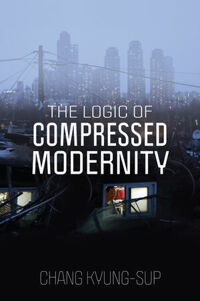
| 245 | 1 4 | ▼a The logic of compressed modernity / ▼c Chang Kyung-Sup. |
| 260 | ▼a Cambridge ; ▼a Medford, MA : ▼b Polity, ▼c 2022. | |
| 264 | 1 | ▼a Cambridge ; ▼a Medford, MA : ▼b Polity, ▼c 2022. |
| 264 | 4 | ▼c ©2022 |
| 300 | ▼a xiii, 240 p. : ▼b ill. ; ▼c 23 cm. | |
| 336 | ▼a text ▼2 rdacontent | |
| 337 | ▼a unmediated ▼2 rdamedia | |
| 338 | ▼a volume ▼2 rdacarrier | |
| 504 | ▼a Includes bibliographical references (p. 209-228) and index. | |
| 651 | 0 | ▼a Korea (South) ▼x Civilization ▼x American influences. |
| 651 | 0 | ▼a Korea (South) ▼x Social conditions ▼y 20th century. |
| 651 | 0 | ▼a Korea (South) ▼x Social conditions ▼y 21st century. |
| 900 | 1 0 | ▼a Chang, Kyung-Sup, ▼e author. |
| 945 | ▼a ITMT |
Holdings Information
| No. | Location | Call Number | Accession No. | Availability | Due Date | Make a Reservation | Service |
|---|---|---|---|---|---|---|---|
| No. 1 | Location Main Library/Western Books/ | Call Number 953.07 C456L | Accession No. 111915646 (1회 대출) | Availability In loan | Due Date 2026-01-19 | Make a Reservation Available for Reserve | Service |
Contents information
Book Introduction
Most theories of modernity are based, explicitly or implicitly, on the development of Western societies since the late medieval period and they generally assume that modernization was a process that took place over several centuries. But these theories are of limited value for understanding the development of societies in Asia and other parts of the world where the process of modernization took place under different circumstances and often in a rapid and highly compressed fashion – not over centuries but in decades. Asian societies have been propelled into modernity too, but theirs is a compressed modernity which displays very different traits.
In this important book, Chang Kyung-Sup provides a systematic account of this “compressed modernity” and uses it to analyse the extreme social changes, complexities, and imbalances found in South Korea and other East Asian societies. For Chang, compressed modernity is a civilizational condition in which economic, political, social and cultural changes occur in an extremely condensed manner in respect to both time and space, and in which the dynamic coexistence of mutually disparate historical and social elements leads to the formation of a highly complex and fluid social system. While these changes enabled South Korea to modernize very quickly and achieve high levels of economic growth, they also created a society that is haunted by various developmental and civilizational costs, including endemic generational conflicts, overloaded family responsibilities, exceptionally high levels of suicide and very low levels of fertility. As with other societies that have experienced compressed modernity, the South Korean ‘miracle’ is replete with extreme and contradictory social traits.
This original account of the nature and consequences of compressed modernity will be of interest to students and scholars of sociology, politics and development studies, as well as anyone interested in South Korea, Asia and postcolonial societies.
Information Provided By: :

Table of Contents
List of Figures, Tables and Illustrations

Preface

Part I. Compressed Modernity in Perspective

Chapter 1. Introduction

Chapter 2. Compressed Modernity: Constitutive Dimensions and Manifesting Units

Chapter 3. Compressed Modernity in the Universalist Perspective

Part II. Structural Properties of Compressed Modernity

Chapter 4. Internal Multiple Modernities: South Korea as Multiplex Theater Society

Chapter 5. Transformative Contributory Rights: Citizen(ship) in Compressed Modernity

Chapter 6. Complex-Culturalism vs. Multiculturalism

Chapter 7. Productive Maximization, Reproductive Meltdown

Chapter 8. Social Institutional Deficits and Infrastructural Familialism

Chapter 9. The Demographic Configuration of Compressed Modernity

Part III. After Compressed Modernity

Chapter 10. The Post-Compressed Modern Condition

Notes

References

Index