

| 000 | 00000cam u2200205 a 4500 | |
| 001 | 000045937836 | |
| 005 | 20180403154103 | |
| 008 | 180402s2017 caua b 001 0 eng d | |
| 010 | ▼a 2016052903 | |
| 020 | ▼a 9781503601680 (cloth : ▼q alk. paper) | |
| 020 | ▼z 9781503603110 (ebook) | |
| 035 | ▼a (KERIS)REF000018389086 | |
| 040 | ▼a CSt/DLC ▼b eng ▼c CSt ▼e rda ▼d 211009 | |
| 043 | ▼a a-kr--- | |
| 050 | 0 0 | ▼a PN5417.J8 ▼b Z87 2017 |
| 082 | 0 0 | ▼a 895.709/9282 ▼2 23 |
| 084 | ▼a 897.099282 ▼2 DDCK | |
| 090 | ▼a 897.099282 ▼b Z96f | |
| 100 | 1 | ▼a Zur, Dafna. |
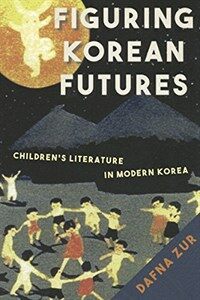
| 245 | 1 0 | ▼a Figuring Korean futures : ▼b children's literature in modern Korea / ▼c Dafna Zur. |
| 260 | ▼a Stanford, California : ▼b Stanford University Press, ▼c c2017. | |
| 300 | ▼a xii, 286 p. : ▼b ill. ; ▼c 24 cm. | |
| 504 | ▼a Includes bibliographical references (p. 249-272) and index. | |
| 505 | 0 | ▼a Introduction : the child in twentieth-century Korea -- Rise of the youth magazine in early colonial Korea -- Figuring the child-heart -- Writing the language of the child-heart -- The proletarian child fights back -- Playing war in late colonial Korea -- Liberating the child-heart -- Epilogue : the turn to science in post-war North and South Korea. |
| 650 | 0 | ▼a Children's periodicals, Korean ▼x History ▼y 20th century. |
| 650 | 0 | ▼a Children's literature, Korean ▼x History and criticism. |
| 650 | 0 | ▼a Korean periodicals ▼x History ▼y 20th century. |
| 945 | ▼a KLPA |
소장정보
| No. | 소장처 | 청구기호 | 등록번호 | 도서상태 | 반납예정일 | 예약 | 서비스 |
|---|---|---|---|---|---|---|---|
| No. 1 | 소장처 중앙도서관/서고7층/ | 청구기호 897.099282 Z96f | 등록번호 111788948 (3회 대출) | 도서상태 대출가능 | 반납예정일 | 예약 | 서비스 |
컨텐츠정보
책소개
This book is the story of the emergence and development of writing for children in modern Korea. Starting in the 1920s, a narrator-adult voice began to speak directly to a child-reader. This child audience was perceived as unique because of a new concept: the child-heart, the perception that the child's body and mind were transparent and knowable, and that they rested on the threshold of culture. This privileged location enabled writers and illustrators, educators and psychologists, intellectual elite and laypersons to envision the child as a powerful antidote to the present and as an uplifting metaphor of colonial Korea's future. Reading children's periodicals against the political, educational, and psychological discourses of their time, Dafna Zur argues that the figure of the child was particularly favorable to the project of modernity and nation-building, as well as to the colonial and postcolonial projects of socialization and nationalization. She demonstrates the ways in which Korean children's literature builds on a trajectory that begins with the child as an organic part of nature, and ends, in the post-colonial era, with the child as the primary agent of control of nature. Figuring Korean Futures reveals the complex ways in which the figure of the child became a driving force of nostalgia that stood in for future aspirations for the individual, family, class, and nation.
정보제공 :

목차
Figures	p. vii
Acknowledgments	p. ix
Introduction: The Child and Modern Korea	p. 1
1	The Youth Magazine in Early Colonial Korea	p. 29
2	Figuring the Child-Heart	p. 47
3	Writing the Language of the Child-Heart	p. 75
4	The Proletarian Child Strikes Back	p. 99
5	Playing War in Late Colonial Korea	p. 123
6	Liberating the Child-Heart	p. 161
Epilogue: The Turn to Science in Postwar North and South Korea	p. 191
Notes	p. 215
Bibliography	p. 249
Index	p. 273